Frequently Asked Questions
Can Kitsu Scale With Us? +
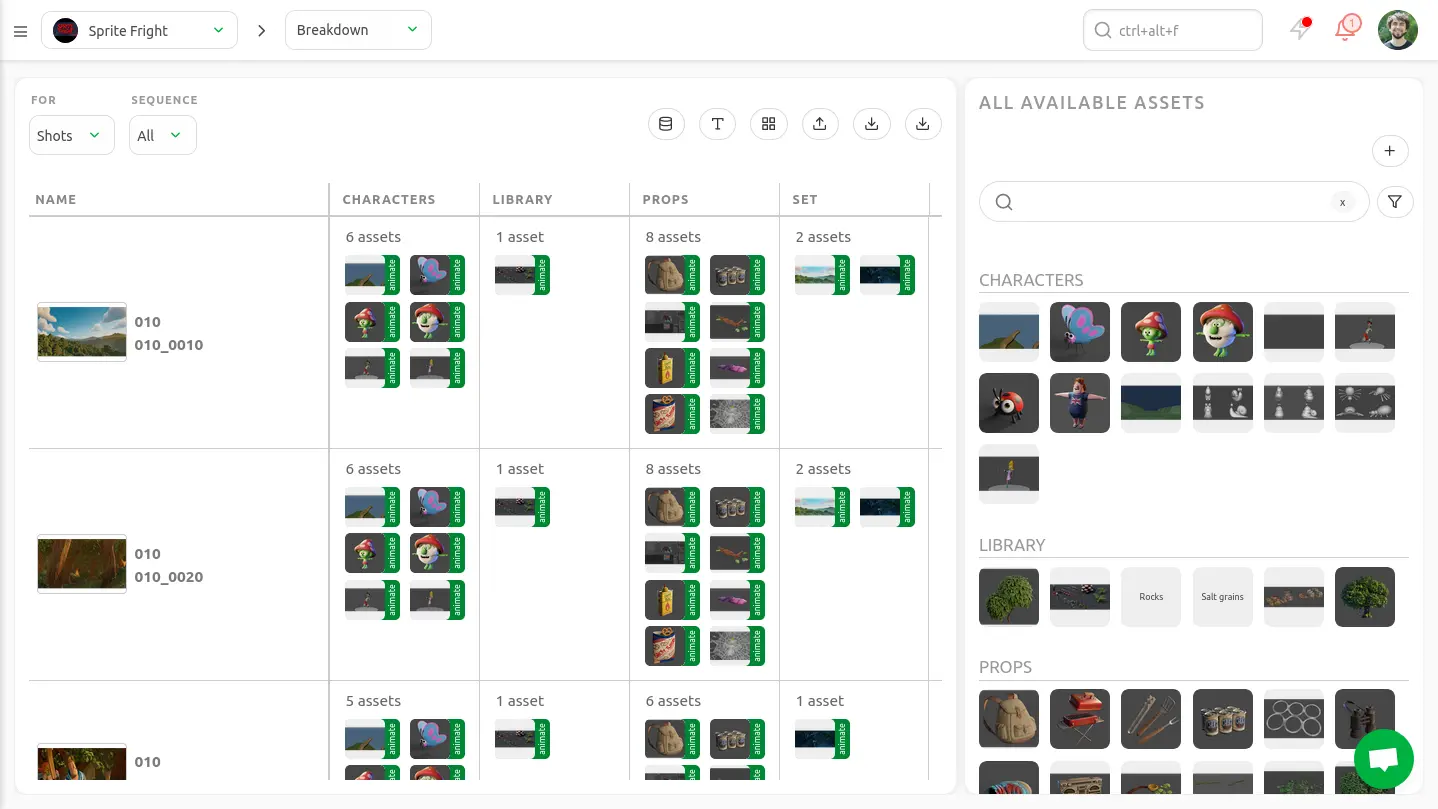
Kitsu is a production management platform built to scale with animation studios at every stage of growth — from small teams on their first short film to large studios running multiple simultaneous series. It eliminates the need for cobbled-together spreadsheets and chat threads by offering clean task tracking for small teams and advanced features like multi-project dashboards, granular permissions, custom workflows, and API/DCC integrations for larger productions. A cross-project view helps producers track progress, spot bottlenecks, and reallocate resources without switching tools. Studios can choose from self-hosted, cloud (SaaS), or on-premise deployment, and move between them as needs evolve with support from CGWire's ops team. As an open-source platform with no vendor lock-in, Kitsu is trusted by studios in 50+ countries — making it a single tool that grows alongside any production pipeline.
Can Our Team Adopt Another Tool? +
Kitsu is a production tracking tool built specifically for animation, VFX, and game studios that solves the common problem of team adoption by designing around real production workflows rather than forcing teams to adapt. It reduces friction for every role — artists get clear task lists, supervisors review directly in playlists, and producers track progress in one place — while acting as a single source of truth that replaces disconnected tools. With role-specific onboarding, a flexible API for pipeline integration, and a pragmatic rollout approach, Kitsu is built so that adoption isn't an afterthought but a core design principle.
Will It Fit Into Our Pipeline? +
Kitsu is a flexible production tracking tool designed to integrate seamlessly into existing animation pipelines rather than replace them. It centralizes production data — assets, shots, tasks, reviews, and metrics — through a REST API and Python SDK, enabling studios to automate workflows, sync tools, and reduce manual overhead. Artists can publish directly from their DCC tools while pipeline TDs build custom integrations without disrupting creative work. With support for webhooks, configurable workflows, real-time collaboration, and open-source transparency, Kitsu adapts to studios of any size and structure, serving as a shared source of truth at the center of production.
Do We Lose Control Over Our Production Pipeline? +
Kitsu is designed to give studios more control over their production pipeline, not less — replacing fragile, person-dependent spreadsheets and siloed tools with structured, visible, and searchable data owned by the studio. Its role-based permissions ensure everyone sees exactly what they need at the project, department, or task level, while a complete audit trail logs every status change, comment, and upload with full attribution. Cross-project dashboards provide a 360° view of all active productions without manual file consolidation, and because Kitsu is open-source with a full REST API and Python client, studios retain complete ownership of their data with no lock-in — whether hosted in the cloud, on-premise, or in a custom self-hosted setup.
How Long Does It Take To See Value? +
Teams can start tracking tasks, reviewing assets, and logging time within hours of signing up — with a live project, imported asset lists, and assigned tasks on Day 1 using pre-built pipeline templates for 2D, 3D, shorts, and game productions. By the end of Week 1, artists have personal to-do lists, the first review cycle has closed with timestamped annotations and version comparisons, and producers have a real-time dashboard that replaces hours of manual reporting. The speed comes from starter templates, a minimal learning curve for artists, cloud hosting that requires no IT setup, and spreadsheet import tools for existing data. Studios across 50+ countries — from small agencies to large VFX houses — have made the switch mid-production by starting with one project and one team. Kitsu is open source and free to self-host, with no sales call or lengthy implementation required.
Can We Put Our IP In The Cloud? +
Studios don't have to choose between cloud convenience and IP control. Kitsu gives studios full data ownership, encrypted hosting under European data protection laws, granular role-based access controls, and the option to self-host on-premise for complete network isolation. Because it's open source, there's no black box — and leaving is always friction-free.
Is Kitsu Too Complicated For Our Team? +
Kitsu is a role-based production management tool designed to eliminate the onboarding complexity that plagues most studio software — artists log in to see only their task list, references, and feedback, while supervisors, producers, and clients each get a tailored view matched to their responsibilities, so no one has to navigate another role's complexity. With onboarding that takes minutes (an invite link, a task list, and a first upload), no training sessions or manuals required, and a clean UI built around a single question — "what does this person need right now?" — Kitsu proves that powerful production tools don't have to be complicated, and is trusted by 300+ studios across 50+ countries to prove it.
Is Kitsu Worth the Cost? +
Studios relying on spreadsheets, email threads, and Slack for production tracking face hidden costs that compound fast — from coordinators spending 4–8 hours weekly chasing status updates, to rework from version confusion, slow freelancer onboarding, and departmental miscommunication that wastes up to 20% of team capacity. Kitsu replaces this fragmented workflow with a single source of truth: real-time dashboards, playlist review tools, automated notifications, and DCC integrations that eliminate entire categories of overhead. Conservative estimates put monthly hidden costs at €1,700–€2,500+, making Kitsu's subscription cost easy to justify — studios can calculate their own ROI by tallying coordination hours, rework time, and the cost of a single missed deadline.
Switching Production Tracking Tools Sounds Risky +
Switching production tracking tools mid-production feels risky, but Kitsu is designed to make migration safe and gradual. Studios can transition one project or department at a time, import existing data via CSV or API, and even run both systems in parallel until confident. CGWire guides teams through the full process — from reviewing your current setup to role-specific training and pipeline integration — typically completing migration in days to a few weeks. As an open-source platform with a REST API and Python client, Kitsu fits into existing pipelines without forcing a rebuild, giving studios full control over their data and infrastructure.
What Happens If Something Breaks? +
Kitsu and CGWire offer a robust support structure built for production realities: dedicated support with clear response-time commitments, direct access to the team that built the product, and a global open-source community of 300+ studios across 50+ countries. Cloud customers benefit from a 99% uptime SLA, isolated instances, and built-in SSL and video processing, while on-premise deployments are actively monitored by CGWire's ops team. Comprehensive documentation, onboarding support, a full REST API, and integrations with popular DCCs and chat tools mean your whole team can get up to speed without outside help. And because Kitsu is open source, you retain full access to the codebase and your data no matter what — a safety net most enterprise tools simply can't offer.
Who Else Is Using Kitsu? +
Kitsu is a production management platform trusted by over 300 studios worldwide — from indie animation houses to large-scale VFX productions across feature films, TV series, games, and shorts. Built on years of real-world feedback, it serves every role in the studio: producers tracking budgets and generating reports, directors and supervisors reviewing playlists and comparing versions, artists managing tasks directly from their DCC tools, and coordinators handling scheduling and resource allocation in one place. As open-source software, Kitsu is fully transparent — no lock-in, no black boxes, and your data stays yours.
Why Not Just Keep Using Spreadsheets or Notion? +
Kitsu is a production management tool designed to replace the patchwork of generic tools—spreadsheets, Notion, and expensive ShotGrid licenses—that animation and VFX studios typically rely on. While spreadsheets lack live status tracking, version control, and dependency mapping, and Notion falls short on media review and real-time pipeline visibility, ShotGrid carries steep licensing costs and complexity. These "free" or familiar tools carry hidden costs in coordinator overtime, miscommunication, missed dependencies, and chaotic review workflows. Kitsu addresses these gaps with automatic versioning, asset-to-shot dependency tracking, structured approval workflows, and role-appropriate visibility—all available via open-source at no initial cost, with a full API for pipeline integration.
Will Kitsu Slow Us Down? +
Kitsu is designed to eliminate the hidden time costs of uncoordinated production workflows — the redundant status pings, manual spreadsheet updates, and scattered review notes that quietly drain hours every week. Its real-time activity feed and notification system keep the entire team automatically aligned the moment a task status changes, removing the need for check-in meetings or follow-up messages. The built-in review engine lets supervisors annotate directly on frames, compare versions side by side, and approve or request retakes from anywhere, compressing multi-day approval cycles into hours. Kitsu integrates seamlessly with DCCs, Slack, Discord, and custom pipelines via Python and REST APIs, letting artists stay in their existing tools while keeping production data centralized. Trusted by over 300 studios across 50+ countries, Kitsu was built by people who understand production pressure — and every feature ships only if it saves time.